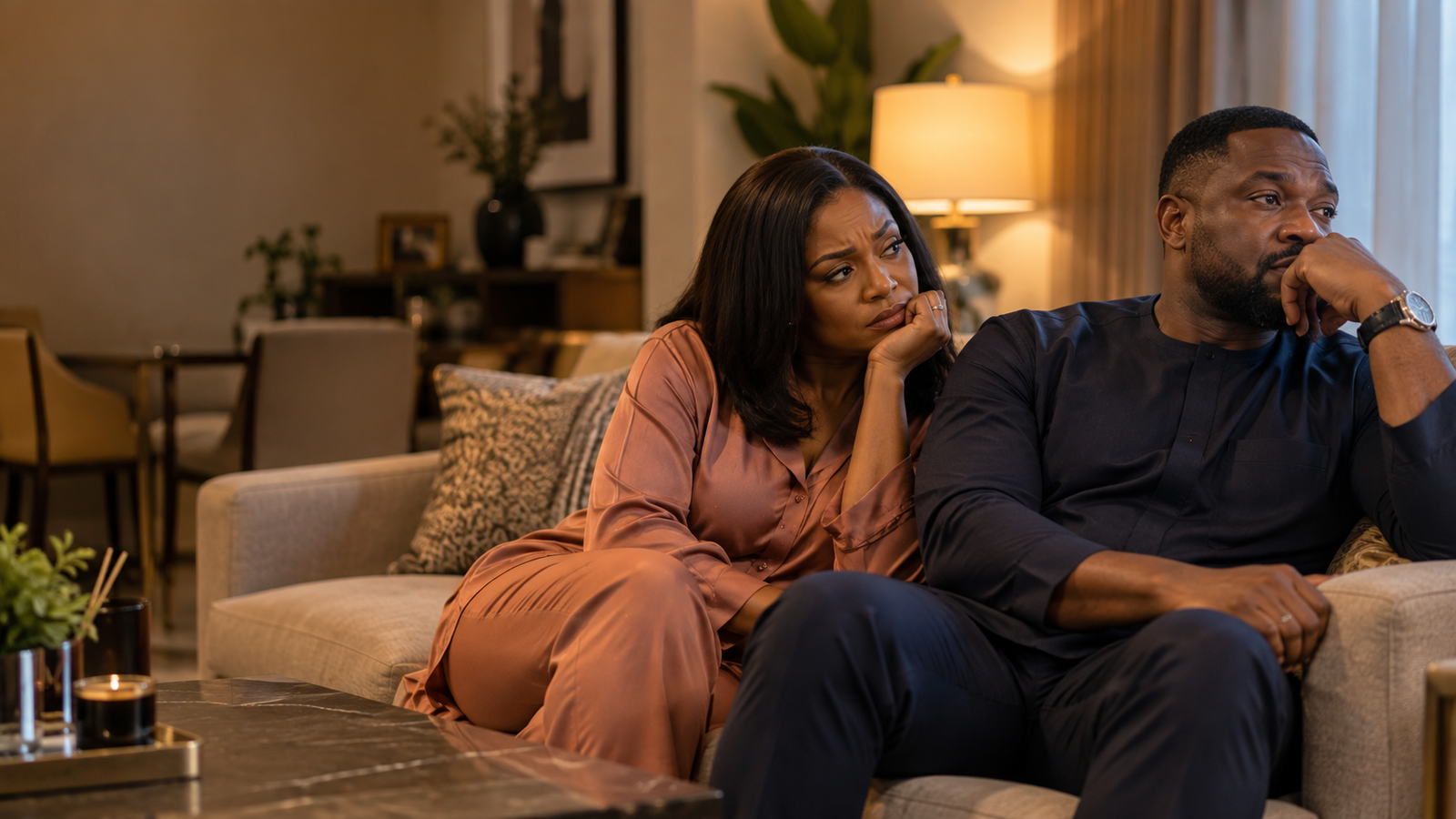
There was a time when he listened to you.
You could tell him something was bothering you and he would look at you. He would ask questions. He would try to understand.
Maybe you didn't always agree.
Maybe you still had arguments.
But you could reach him.
Then somewhere along the way, something changed.
Now you can explain something three different ways and somehow end up having the same argument.
You tell him you're hurt.
He hears criticism.
You ask him to spend more time with you.
He hears pressure.
You ask, "Why don't you ever talk to me anymore?"
He becomes quiet.
And that silence makes you even more desperate to be heard.
Maybe you've had a version of that conversation.
Maybe you've had it many times.
And each time, you promise yourself you'll explain it better next time.
You'll choose your words more carefully.
You'll wait until he's in a better mood.
You'll try not to sound angry.
You'll try not to cry.
You'll try to make him understand that you're not attacking him.
But somehow...
You are still not getting through.
Maybe You've Been Looking at the Problem From the Wrong Side
For years, married women have been given the same advice:
"You two just need to communicate better."
And communication certainly matters.
But after more than three decades of counseling women, I began noticing something that the usual advice didn't explain.
Some women were already communicating.
They were talking.
Explaining.
Asking questions.
Writing messages.
Trying to have "the conversation."
And yet their husbands still seemed to become more distant the harder they tried to get through.
That made me ask a different question:
What if the problem isn't simply that a husband isn't hearing the words?
What if something is happening in the way he is experiencing the interaction before he ever responds to the words?
The Pattern Many Couples Get Trapped Inside
It can begin with something completely understandable.
A wife feels disconnected.
She wants closeness.
So she reaches.
She asks questions. She brings things up. She wants reassurance. She wants her husband to acknowledge what she is feeling.
But if he is already feeling pressured, criticized, inadequate, or emotionally overwhelmed, he may respond by pulling away.
And now she feels even more alone.
So she reaches harder.
He pulls away further.
She interprets the withdrawal as proof that he doesn't care.
He experiences the increased pursuit as more pressure.
And the cycle gets stronger.
This does not mean the wife is "the problem."
It does not mean she should accept neglect, disrespect, cruelty, or mistreatment.
And it certainly does not mean she should silence herself.
It means there may be another part of the pattern that deserves to be understood.
The Discovery I Began Calling the “Married Man Brain”
I needed a simple way to describe something I had repeatedly observed in my work with women.
So I began calling it the "Married Man Brain."
It is not a medical diagnosis.
It is the name I use for a pattern I noticed in marriage: the way some husbands can begin experiencing familiar words, requests and emotional situations differently once they are inside the responsibilities, routines and pressures of married life.
The same sentence can land differently depending on what is happening emotionally underneath it.
And this is where many wives become confused.
Because she knows what she meant.
She knows she was trying to express hurt.
She knows she wanted connection.
She knows she was asking for help.
But what matters in that moment is also what he experiences himself as hearing.
He may experience: "You're failing me again."
He may experience: "Nothing I do is enough."
He may experience: "You're telling me I'm not doing my part."
He may experience: "Here comes another difficult conversation."
Again, this isn't about deciding which person is right.
It is about understanding why two people can stand in the same room, use perfectly understandable words, and still walk away feeling as though they were speaking completely different languages.

For more than 35 years, I have listened to women describe what happens behind closed doors in their marriages.
Different women. Different husbands. Different circumstances.
But certain patterns kept appearing.
Women telling me, "He doesn't listen."
Women saying, "Every serious conversation turns into a fight."
Women saying, "I feel alone even though I am married."
And after 43 years of marriage myself, I have also learned that understanding the pattern between two people can sometimes change what happens next.
That is why I wanted to put this discovery into a practical book for women who are tired of repeating the same conversation and getting the same result.
Because There Is a Difference Between Talking to a Man and Reaching Him
Getting through to someone is not always about finding better words.
Sometimes it is about understanding what is happening emotionally before the words are even spoken.
It can involve the timing of an interaction.
The emotional atmosphere around it.
The way closeness is created outside difficult conversations.
The signals your husband may be responding to without consciously realizing it.
And the small things that can either make emotional connection easier...
Or make both people retreat into their familiar corners.
Once you begin seeing those patterns, you can stop treating every difficult moment as another debate that has to be won.
You can begin changing your side of the pattern.
That Is Why I Wrote This Book
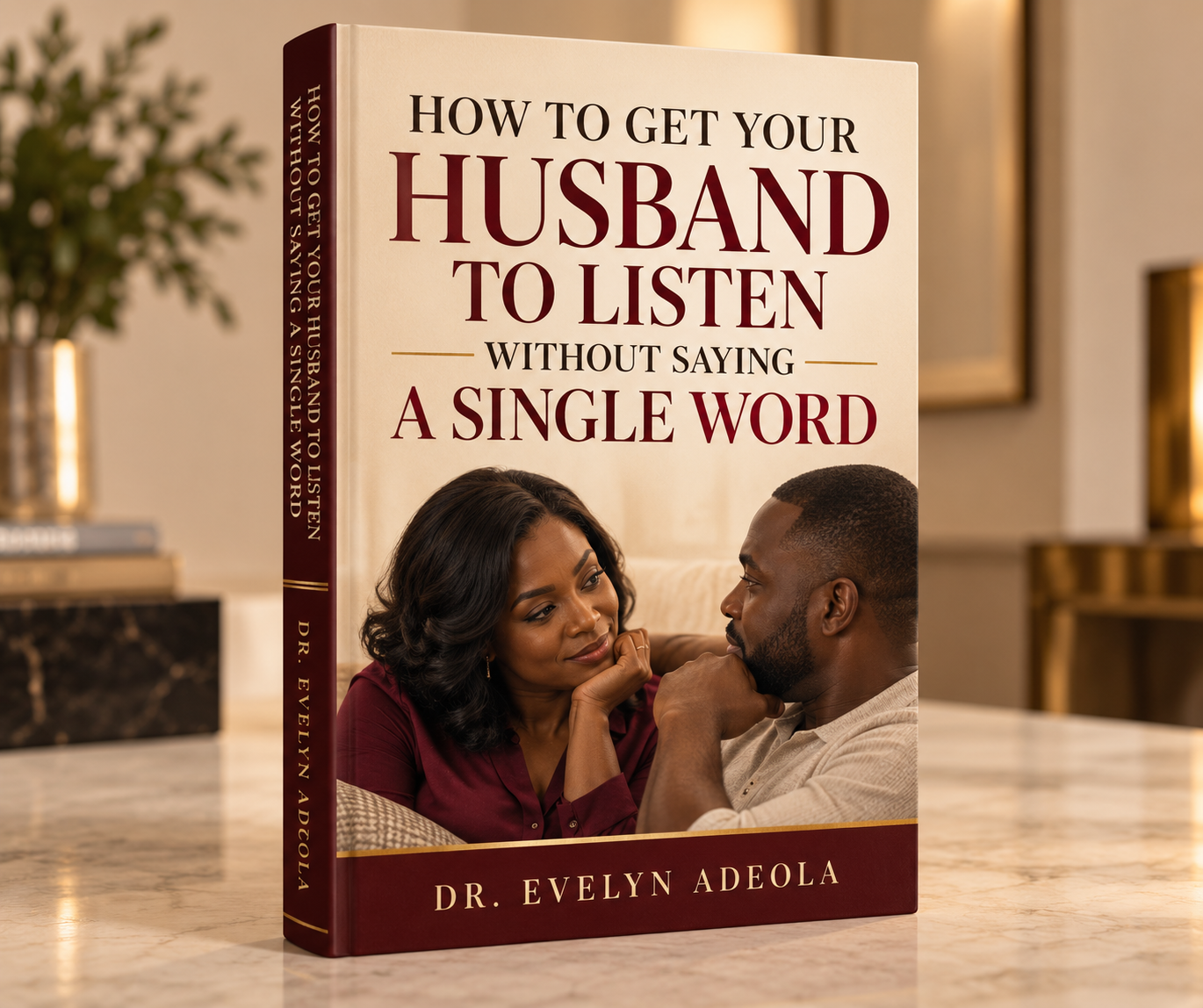
I wrote How to Get Your Husband to Listen Without Saying a Single Word for the woman who has reached the point where she is asking:
"What else am I supposed to do?"
"How do I talk to him when he doesn't want to talk?"
"How do I get my husband to understand me without starting another fight?"
"How do I feel close to my husband again?"
The answer isn't another list of perfect sentences.
It begins with understanding what may be happening beneath the conversation.
How to Get Your Husband to Listen Without Saying a Single Word
A Practical Guide for Wives Who Feel Unheard, Disconnected or Alone
By Dr. Evelyn Adeola
Inside the Book, You'll Begin to See...
This Isn't Another "Communicate Better" Book
If talking alone had solved the problem, you probably wouldn't still be reading this.
This book approaches marriage from a different direction.
Instead of giving you another collection of communication rules to memorize, it helps you understand the interaction underneath the words.
Because sometimes the most important part of an interaction happens before either person says anything.
And sometimes what brings a husband closer isn't another explanation.
It is experiencing his wife differently.
That is the part I want you to discover for yourself inside the book.
And Yes, Sometimes Connection Starts Without a Conversation
There is a reason the book doesn't focus only on talking.
Marriage is not built entirely from conversations.
It is also built from the everyday moments between them.
A warm greeting.
Sitting beside each other.
Holding hands.
A hug that isn't part of an argument or a request.
Resting together after a long day.
Looking at each other when one person is speaking.
Small affectionate moments that remind two people that they are still connected outside the problems they are trying to solve.
These moments don't replace important conversations.
They can help create the emotional ground on which those conversations happen.
SHOW ME HOW TO GET THROUGH TO HIMAnd When You Get the Book Today, You Also Receive 2 Practical Bonuses
The Marriage Connection Collection
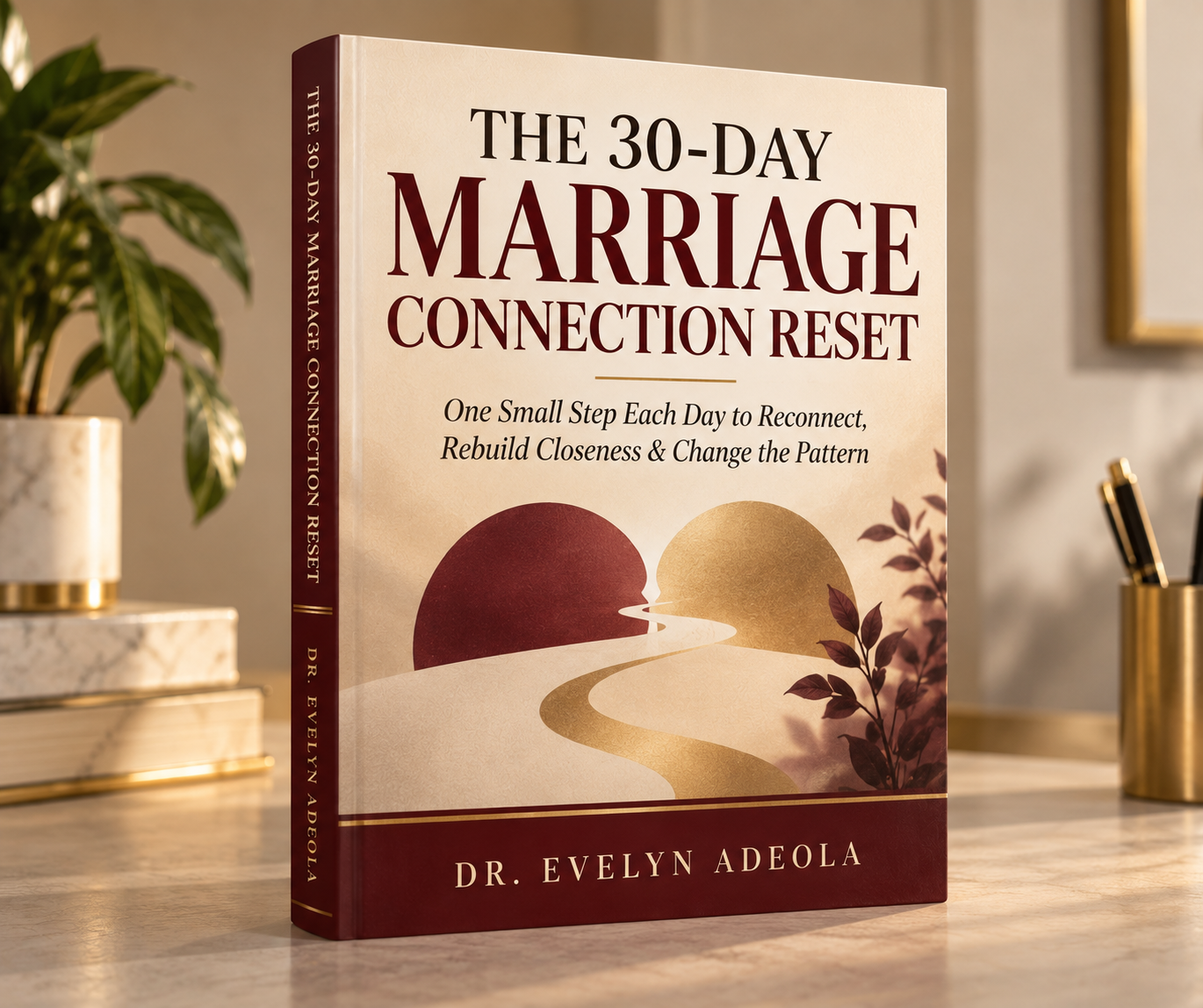
🎁 BONUS #1: The 30-Day Marriage Connection Reset
You can understand a relationship pattern intellectually and still not know what to do tomorrow morning.
That's why this bonus is designed as a simple 30-day implementation guide.
Each day gives you one practical action, observation or reflection to help you begin creating a different kind of interaction inside your marriage.
No complicated homework. No long relationship lectures. Just one small step at a time.
🎁 BONUS #2: What Should I Say?
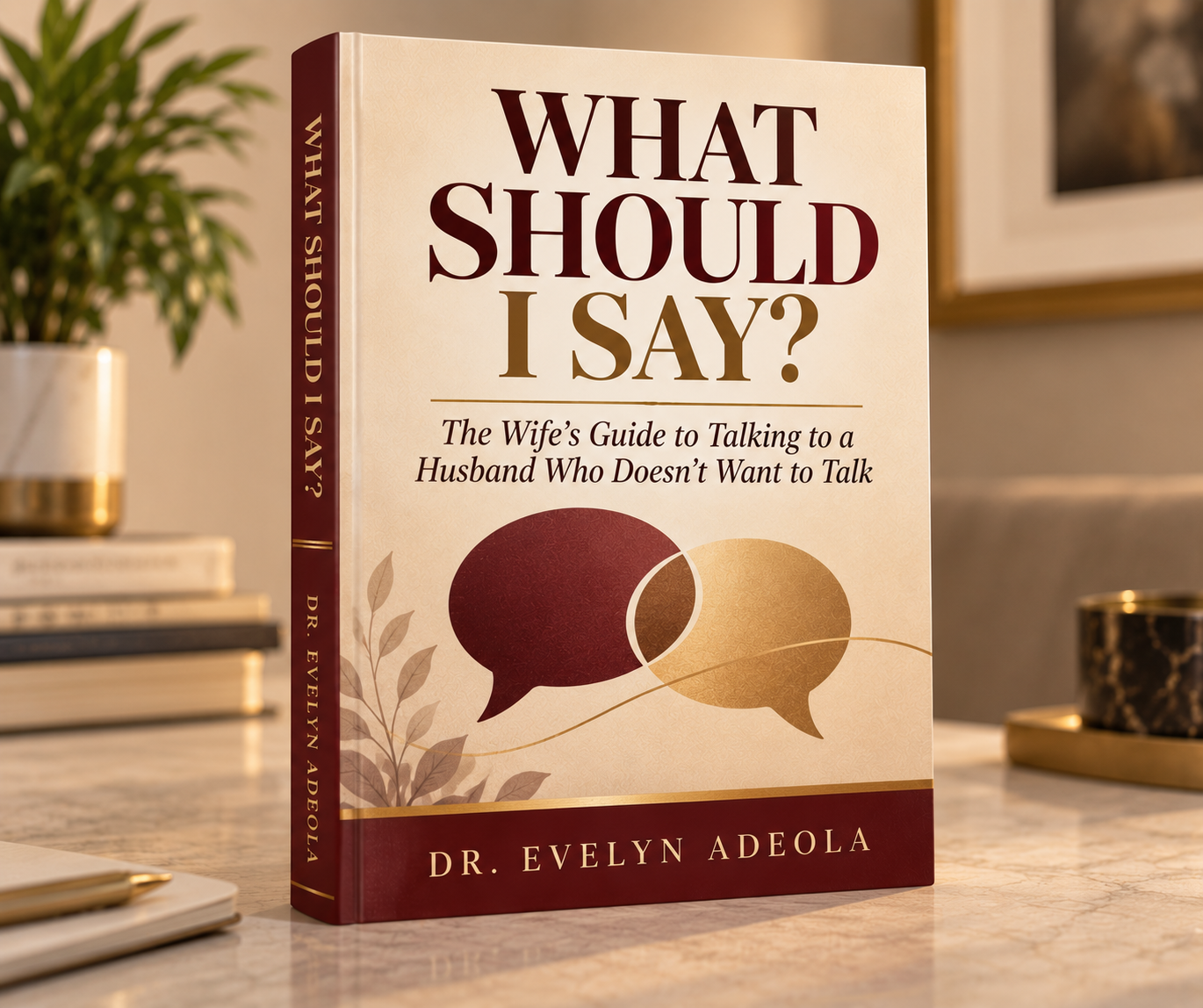
For those moments when you really do need to have the conversation.
What do you say when he comes home and barely speaks? When you need his attention? When you're hurt? When you're angry? When he shuts down? When you need to discuss intimacy? When you want to reconnect after a fight?
This practical guide helps you think about the purpose of the conversation, the emotional state you're approaching it from, and different ways of opening difficult subjects without automatically turning them into another confrontation.
You Get the Complete Marriage Connection Collection Today
30-Day Money-Back Guarantee
Read the book. Work through the material. Try the practical exercises.
If you decide within 30 days that the book wasn't right for you, you can request your money back.
You have 30 days to decide.
What Happens From Here Is Up to You
Explain yourself again.
Try a different set of words.
Wait for the "right" moment.
Have the same argument in a slightly different form.
Wonder why he still doesn't seem to understand.
Feel increasingly alone while both of you remain under the same roof.
Understand what may be happening underneath the conversation.
Recognize the moments when reaching harder may not create more connection.
Learn how to approach your husband differently.
Begin changing your side of the interaction.
Create more opportunities for connection outside the arguments.
And discover what it means to get through to him without relying on words alone.
One More Thing Before You Go
You don't have to pretend that everything is okay when it isn't.
You don't have to stop having needs.
You don't have to accept being ignored.
And you don't have to become someone you're not just to keep your marriage together.
But if you've been trying the same approach over and over again and getting the same response, it may be worth learning how to see the interaction from a different angle.
Because sometimes the breakthrough isn't finding a better argument.
Sometimes it is understanding what is happening between the two people having the argument.
P.S. #1: If you've ever finished a serious conversation with your husband and thought, "He heard my words, but he didn't hear me," this book was written with that moment in mind.
P.S. #2: The goal isn't to give you a magic sentence that makes your husband suddenly agree with everything you say. It is to help you understand the emotional patterns that can make connection easier or harder.
P.S. #3: You receive the main book, the 30-Day Marriage Connection Reset, and the What Should I Say? guide for ₦4,999, with a 30-day money-back guarantee.